


 Get in touch
Across Australia, the traditional playground is being reimagined. The best playspaces now invite kids to explore, climb, balance and test themselves, then come back the next day with a completely new game in mind.
Layout and planning matter, but a playground is only as good as what’s in it. And the material makes a big difference. Here’s why handcrafted timber is our material of choice for so many of the playspaces we design, supply and install.
Why We Love Timber Playgrounds
Timber brings warmth, texture and individuality to a playspace. It’s also tough, natural and endlessly adaptable. Here are four reasons it works so well.
Built to last, and to look better with age
A playground is a long-term investment, so it needs to stand up to years of enthusiastic play and all kinds of weather. Well-chosen, well-crafted timber is up to the job.
It ages well, too. Rather than looking dated as trends change, natural timber weathers to a soft silver-grey and gains character over time. A good timber playground soon becomes a much-loved part of the neighbourhood.
A real connection with nature
Kids can feel the grain, spot the knots and see how every log is a little different. These are sensory details that plastic and steel can’t easily copy.
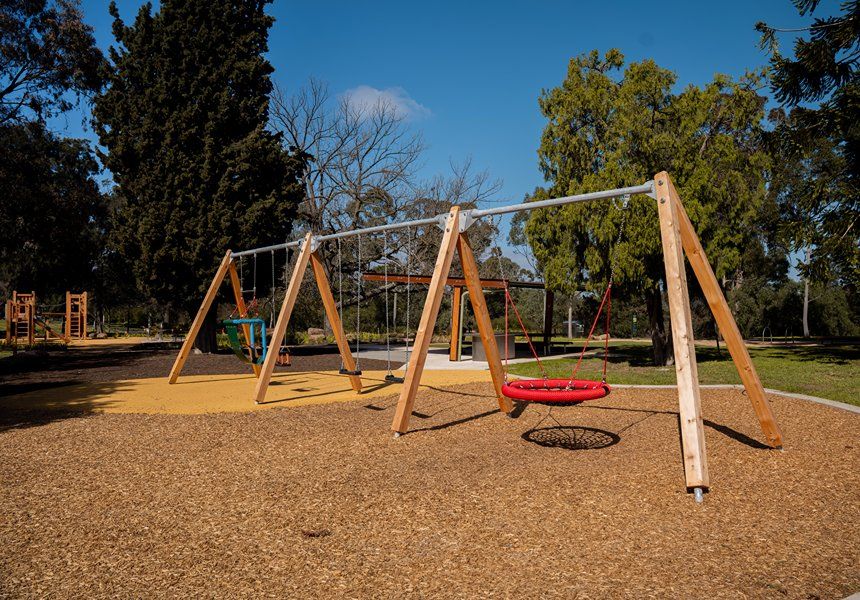
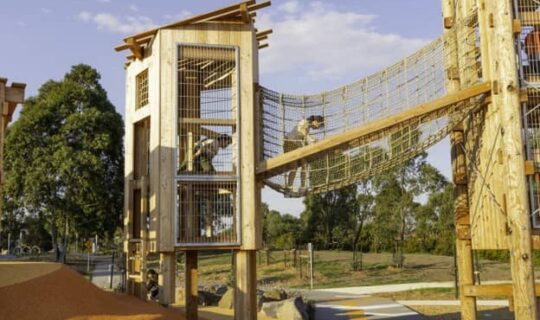
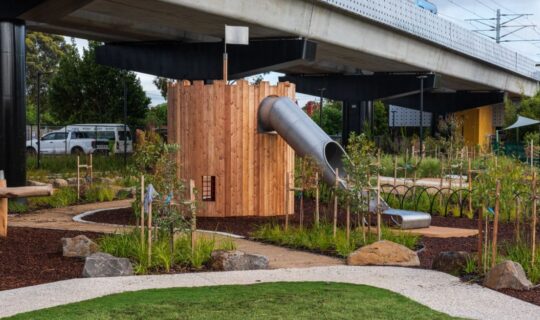
Timber also sits comfortably among trees, planting, rocks and open lawn, so the playspace feels like part of the landscape rather than something dropped into it. At Fairfield Park in Melbourne, our larch Tree Top Walk weaves around the park’s established trees, just a stone’s throw from the Yarra River.
Every playground is one of a kind
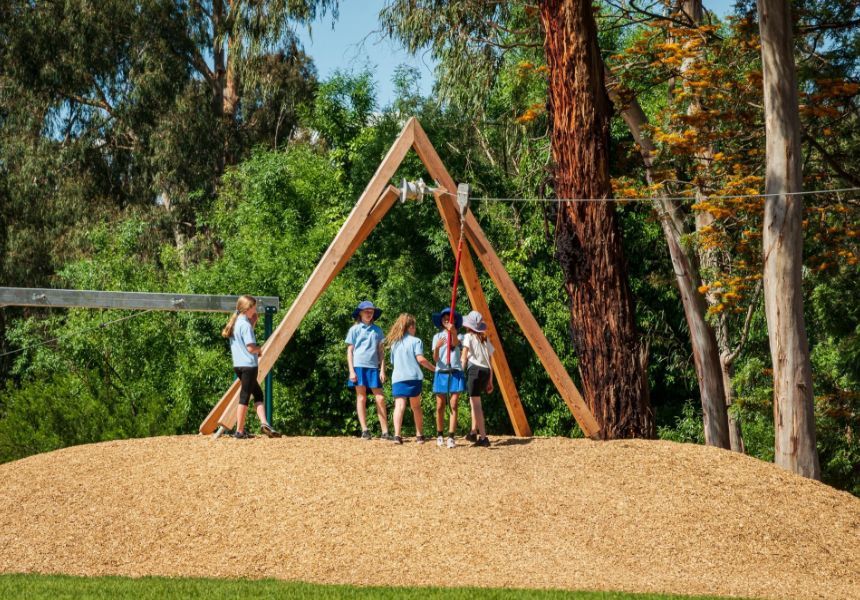
Handcrafted timber frees designers from standard, off-the-shelf equipment. Logs can be shaped, stacked and combined in imaginative ways, so each playground has its own identity.
That matters to kids. A timber structure doesn’t have to tell them exactly what to do. An unusual shape might become a climbing challenge, a lookout, a fort or part of a game they’ve made up themselves. The less prescriptive the design, the more room for imagination. Learn more about our bespoke playspace design and nature playgrounds.
Strength that opens up adventure
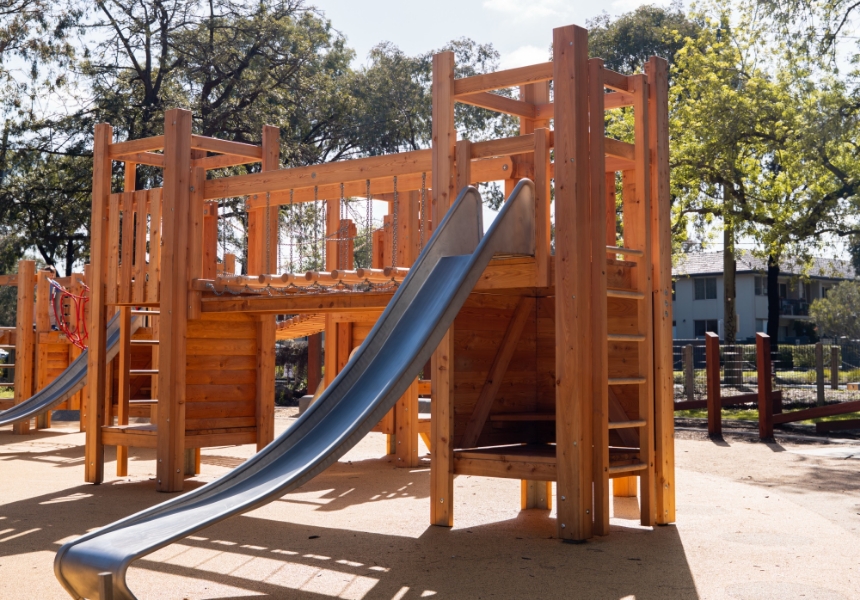
A playground has to be structurally sound, but strength doesn’t have to come at the expense of creativity. Solid timber frames can carry bridges, nets, walkways and towers at different heights, with smaller challenges for climbing, balancing and scrambling along the way.
The best timber playgrounds make it all feel effortless. Strength provides the foundation, craftsmanship brings the structure to life, and kids’ imaginations take care of the rest.
Our Materials
Whether we’re designing a playground for an early learning centre or a council park, we choose materials proven to handle Australian conditions. Our partners’ timber ranges are built around three woods. Read more on our materials page.
Larch
Our play partner Richter Spielgeräte is known for its strict wood quality criteria. Since 1989, its Bavarian workshop has handcrafted much of its play equipment from untreated mountain larch.
The larch comes from the Alps, where it grows slowly at 800 to 1,800 metres above sea level. That slow growth gives the timber tight growth rings, fewer resin pockets and fewer splinters. It all comes from sustainably managed forests, and Richter’s timber is PEFC™ certified.
The trees are felled in winter, so the cut timber can dry before fungal spores appear in spring. The logs are delivered almost free of sapwood, leaving the durable heartwood. Larch posts usually stand on steel feet, keeping the timber clear of the ground. No lacquers or chemical preservatives are used.
Robinia
Robinia, also known as black locust, is a fast-growing hardwood with remarkable natural durability. Mature Robinia heartwood is rated among the most durable timbers in Europe and is highly resistant to rot, fungi and insects.
That makes it ideal for posts set straight into the ground, which is why Richter uses it for many of its climbing structures. Richter reports that in almost 25 years it has never had to replace a Robinia stand post because of rot. Its naturally twisting trunks give every climbing frame a character of its own. Traditionally, Robinia was used in shipbuilding and for railway sleepers.
Accoya
Accoya is the timber behind every moveart playsculpture and seat. It starts as fast-growing radiata pine from FSC® and PEFC™ certified forests.
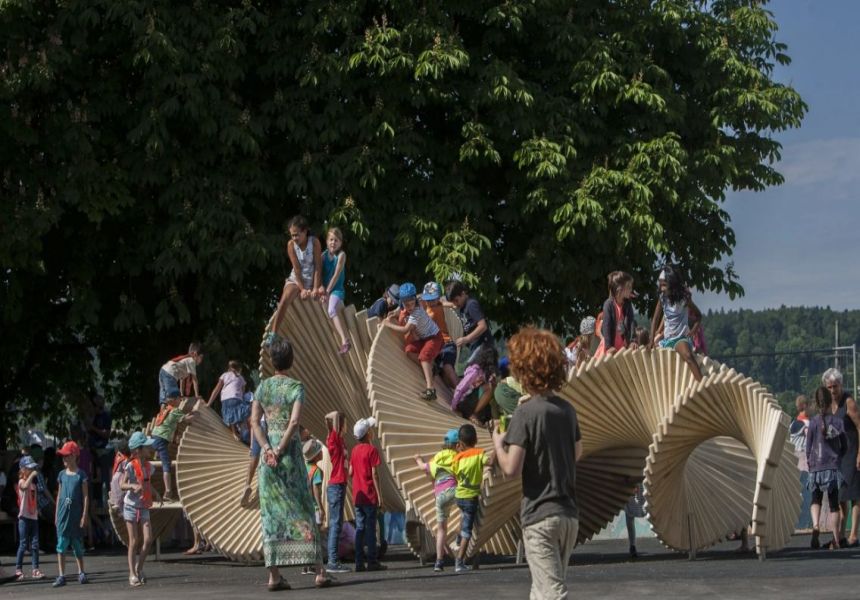
The timber is then modified through acetylation, a process that changes the wood’s cell walls so they take up far less water. Nothing is added that doesn’t already occur naturally in wood. The result is a remarkably stable timber that won’t readily swell or shrink. It resists splitting and splintering, and insects and fungi don’t recognise it as food. Accoya has the highest durability rating for timber (Class 1, EN 350) and is Cradle to Cradle Gold certified. The manufacturer warrants it for up to 50 years above ground and 25 years in the ground.
Recent Timber Playground Projects
Fairfield Park Playspace (VIC)
For Yarra City Council, we supplied and installed a Richter Spielgeräte Tree Top Walk. Five larch Platform Huts are linked by bridges and walkways, alongside Climbing Stacks and a Multi Swing with a Stork Nest.
CSi Club Southport (QLD)
The CSi Club Southport renovation turned an underused alfresco dining area into several distinct spaces, including a playspace for kids. The club wanted a space for imaginative play, so the centrepiece is a bespoke Richter treehouse structure with a custom helix slide and sensory elements.
The Vineyard Hotel (NSW)
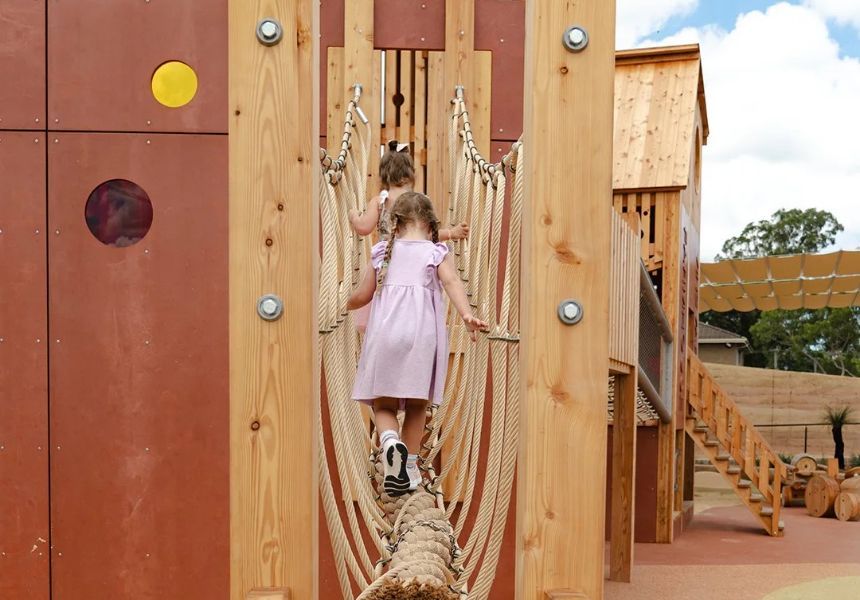
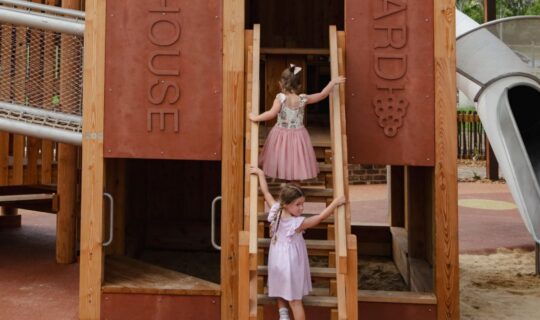
In Sydney’s outer north-west, the Zenith Hotels group transformed the local pub into The Vineyard, a family-friendly destination on an eight-hectare site. The latest addition is the Vineyard Farmhouse, a playspace we designed, supplied and installed using Richter Spielgeräte equipment for a wide range of ages and abilities.
Who we work with
We work with clients across Australia, creating outdoor spaces that spark imagination and bring communities together:
- Local councils
- Landscape architects
- Builders
- Property developers
- Hospitality groups
- Schools
Every client has different goals, budgets and sites, so we work closely with each one to make sure every project delivers lasting value. Ready to start? Get in touch.
FAQs
Which timbers do you use?
Mainly larch, Robinia and Accoya. Our play partner Richter Spielgeräte handcrafts its equipment from Alpine mountain larch and Robinia, and our partner moveart makes its playsculptures and street furniture from Accoya.
Why is handcrafted timber our material of choice?
It gives us the freedom to create playgrounds with real character. Natural shapes, textures and variations become part of the design, encouraging kids to climb, explore, balance and make the playground their own.
Do timber playgrounds comply with AS 4685?
Yes. Our playground designs comply with AS 4685, the Australian standard for playground equipment and surfacing, and finished structures are certified by an independent, registered certifier. Richter’s equipment is manufactured to meet or exceed the relevant Australian playground standards.
How long does a timber playground last?
With the right timber and good design, a very long time. Richter keeps its larch off the ground on steel feet and uses highly durable Robinia where timber goes into the ground. How long any playground lasts also depends on the timber chosen, the site and regular inspection and maintenance.
Can timber create more imaginative playspaces?
Absolutely. Timber lets us move beyond conventional playground forms with unusual structures, sculptural elements and climbing challenges. Kids find new ways to play every time they visit.
Related blog
-
 AS 4685 Explained: Australia’s Playground Equipment Safety Standard
Playgrounds have always been fundamental to the development of young people across Australia. Many of the skills we need as...
Read More
-
Designing Playgrounds for All Abilities: Principles of Inclusive, Accessible Play
Playgrounds are a space that have always fostered a genuine sense of community and inclusivity. They are also a place...
Read More -
A Creative Playspace Inspired by Aussie Farm Life
From a farmhouse tower to a magical slide inspired by an Aussie grain silo, the playspace we created for The...
Read More -
Why Every Community Needs a Quality Playground Space
According to Early Childhood Australia, pre-school kids should be spending at least 80 mins a day in physical activities like,...
Read More


 20/324 Settlement Road
 1300 920 439
 info@urbania.com.au


