


 Get in touch
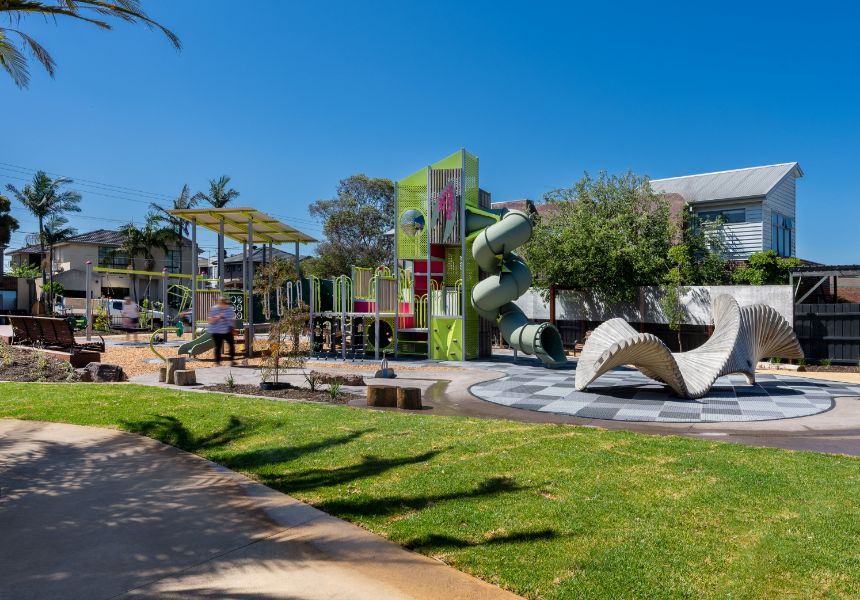
Playgrounds have always been fundamental to the development of young people across Australia. Many of the skills we need as adults are developed in the playground, and this is why these spaces need to be built around safety for all.
In Australia, the rules and regulations around equipment safety are set by AS 4685.1:2021 and AS 4685.0:2017, which are designed to minimise risks and protect the well-being of children while they are playing on a playground.
In this blog post, we’ll discuss these Australian Standards in detail to understand how they contribute to creating safe and enjoyable play areas.
Why Playground Safety Standards Matter
When councils, schools, developers and other organisations invest in public play spaces, safety needs to be considered from the very beginning of a project. Great playgrounds also need to be engaging, inclusive, durable and suited to the community they serve.
In this sense, the right design, materials, construction methods and ongoing maintenance all contribute to creating a playground that can be enjoyed with confidence.
AS 4685 provides an important framework for understanding the safety requirements associated with playground equipment.
This is why experience and thoughtful construction are central to the commercial playground designs we create in Australia. From the initial concept through to construction and completion, we collaborate closely with designers, councils, schools and project stakeholders to bring outdoor spaces to life while maintaining a strong focus on quality, safety and functionality.
AS 4685 Australian Safety Standards for Playground Equipment
Now that we’ve established the role of safety in a broader sense, let’s pivot to the guidelines set out within the current AS 4685 standards.
AS 4685.0:2017 (Development, Installation, Inspection, Maintenance, and Operation)
This standard provides the overarching framework for managing playground equipment across its entire lifecycle, from initial development through to ongoing operation.
- Introduces risk-benefit analysis, giving operators a structured way to distinguish acceptable play risks from unacceptable hazards
- Sets out routine maintenance and inspection regimes: daily, monthly/quarterly, and annual, to ensure ongoing structural integrity
AS 4685.1:2021 (General Safety Requirements and Test Methods)
This standard specifies the foundational design, construction, and testing safety rules for permanently installed public playground equipment.
- Covers minimum space requirements, free height of fall (capped at 3.0m generally, or 1.8m for supervised early childhood areas), and entrapment hazards
- Sets stability test methods equipment must pass before installation
- Adapted from the European EN 1176-1 standard to suit Australian conditions
Legal Status
These standards are advisory rather than mandatory law, unless specifically referenced in state legislation, childcare/school policies, or council regulations. Even so, they’re commonly treated as the industry benchmark of acceptability, and are frequently used in legal proceedings to assess duty of care if an injury occurs.
AS 4422: Playground Surfacing Standard
While AS 4685 focuses primarily on the safety requirements for playground equipment, the surface underneath and around that equipment is just as important. This is where AS 4422:2022 plays a critical role.
AS 4422:2022 is the Australian Standard for playground surfacing, providing requirements and test methods for assessing whether a particular surfacing material is suitable for use in playgrounds.
The standard is particularly important in areas where children may fall from play equipment, helping to ensure that the surface provides an appropriate level of impact protection.
Playground surfaces come in many forms, including engineered wood fibre, loose-fill materials, synthetic surfaces and rubber-based systems. However, not all surfaces provide the same level of protection.
Their performance can depend on factors such as material type, depth, installation, drainage, maintenance and the height of the equipment above the surface.
Two important concepts when considering playground surfacing are Critical Fall Height and impact attenuation.
1. Critical Fall Height
Critical Fall Height (CFH) is a key measure used when assessing playground surfacing. It refers to the maximum fall height for which a surface is considered to provide adequate protection against a potentially severe head injury, when tested against the relevant requirements.
- The higher the potential fall from equipment, the greater the need for suitable impact-attenuating surfacing
- A climbing structure, platform, or elevated play element creates a greater potential fall height than equipment positioned close to ground level
- Surfacing needs to be selected and installed with these potential fall heights in mind
This is why playground design can’t focus on the equipment alone. The height of the equipment, the surrounding fall zones, and the performance of the surface all need to work together as part of an overall safety approach.
NQS and National Regulations Requirements
Playground safety for childcare and early learning services isn’t just a matter of AS 4685, it’s also a legislated requirement under the National Quality Framework.
- Education and Care Services National Regulations require premises, furniture, and equipment to be safe, clean, and in good repair (Regulation 103)
- The National Quality Standard’s Quality Area 3 (Physical Environment) requires outdoor and indoor spaces, furniture, and equipment to be fit for purpose and suitable for their intended use
- ACECQA service approvals commonly reference AS 4685 directly when assessing falling space, impact areas, and free space around equipment
In practice, this means services are expected to select and install equipment and surfacing, including addressing Critical Fall Height, in line with the Australian Playground Standards to meet their NQS and National Regulations obligations.
2. Impact Attenuation
Impact attenuation refers to a surface’s ability to absorb and reduce the energy generated when a child falls.
AS 4422 uses testing methods to assess the impact performance of playground surfaces. One of the measurements associated with impact testing is G-max, which provides an indication of the severity of the impact experienced during a standardised test.
Generally, a surface with better impact attenuation will absorb more of the energy generated during a fall. This can help reduce the forces transferred through the head and body when a child lands.
However, playground surfacing isn’t simply about choosing the “softest” possible material. The surface needs to be appropriate for the equipment, fall height, location and intended use of the playground, while also being correctly installed and maintained.
How AS 4422 and AS 4685 Work Together
AS 4422 and AS 4685 should be considered together when developing a safe playground environment.
THis is because AS 4685 addresses the safety requirements associated with playground equipment, while AS 4422 focuses specifically on the performance and suitability of playground surfacing.
Together, these standards provide a framework for the design, planning, and construction phase of playground development, particularly in regard to how equipment and surfacing work as part of the same safety system.
At Urbania, we understand that successful playground construction involves much more than installing play equipment. The surrounding landscape, surfacing, construction quality and overall design all contribute to the finished environment.
By taking a considered approach to both equipment and surfacing, playground projects can provide children with opportunities to explore, challenge themselves and enjoy active play while incorporating appropriate safety considerations from the ground up.
Why Playground Surfacing Matters
A playground can have well-designed equipment, but without appropriate surfacing, the overall safety of the play area can be compromised.
Falls are a normal part of active play. Children climb, jump, swing, balance and explore, and occasionally they will lose their footing. Effective impact-attenuating surfacing provides an important layer of protection in areas where falls are foreseeable.
The surface also needs to perform consistently over time. Factors such as weather, heavy use, displacement of loose-fill materials and general wear can affect performance.
AS 4685.0 regulations are strictly followed for all regular inspections and maintenance checks, and are an important part of keeping playground surfaces performing as intended.
Choosing the Right Playground Surface
There isn’t one single playground surface suitable for every project. The right solution depends on the design of the equipment, site conditions, and how the space will be used.
Choosing the right surface bridges the gap between impact safety (AS 4422) and inclusive access (AS 1428: Design for Access and Mobility). While loose-fill materials like engineered wood fibre offer great impact absorption, they can make movement difficult for wheelchair users and carers with prams if not meticulously maintained.
Softfall surfaces such as wet pour rubber or high-density synthetic grass over an impact pad, provide dual benefits: reliable impact attenuation during a fall, and a smooth, firm pathway that ensures barrier-free mobility across the entire playspace.
When choosing a playground surface, take into consideration:
- The potential fall height of the equipment
- The required fall zones around play equipment
- The type and configuration of the playground equipment
- The impact attenuation performance of the proposed surface
- Drainage and site conditions
- Expected levels of use
- Accessibility requirements
- Long-term maintenance
- Durability and weather exposure
By evaluating both AS 4422 (safety) and AS 1428 (accessibility) during early planning, you ensure the finished playspace is not only compliant and safe, but truly welcoming for every member of the community.
Urbania: Our Story
Urbania is dedicated to transforming outdoor spaces that inspire, connect, and empower communities. We specialise in creating engaging playgrounds, educational play environments, revitalised parks, streetscapes, and urban precincts where children, families, and residents can come together and flourish.
With a team boasting over 60 years of combined experience and a highly skilled group of tradesmen, we have the proven expertise to execute your landscape construction and playground projects to the highest standard.
We deliver bespoke solutions for schools, councils, property developers, builders and hospitality groups that respond directly to each client and project’s needs.
Our Recent Projects
At Urbania, we specialise in transforming public spaces into vibrant community hubs through innovative playground design for councils. We can bring imagination to life by creating play environments that foster childhood development while always meeting strict safety standards and community needs.
Whether you’re planning a neighbourhood park upgrade or developing a major recreational precinct, our collaborative approach will make certain your council playground design exceeds expectations while still staying within budget.
Moreland Station
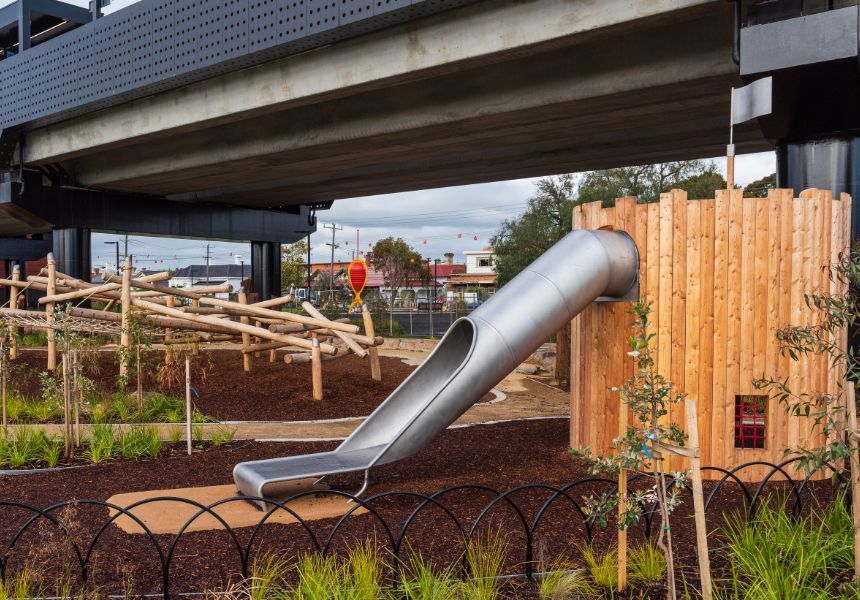
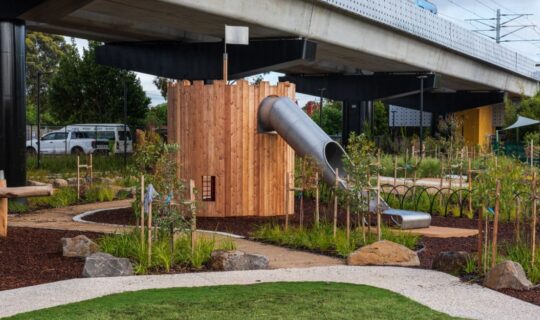
As part of the Victorian Government’s Level Crossing Removal Project, Moreland Station was raised above the roadway, creating a unique opportunity for Merri-bek City Council to transform the space beneath the rail line into a vibrant community playspace.
Working with landscape architects Tract, the vision was to create a nature-play wonderland where local children could explore, climb, imagine and connect with nature, providing a welcome escape from the surrounding urban environment.
The thoughtfully designed playspace brings adventure and natural elements into the heart of the community, giving children a place to play, discover and enjoy the outdoors.
Wonguim Wilam Playspace
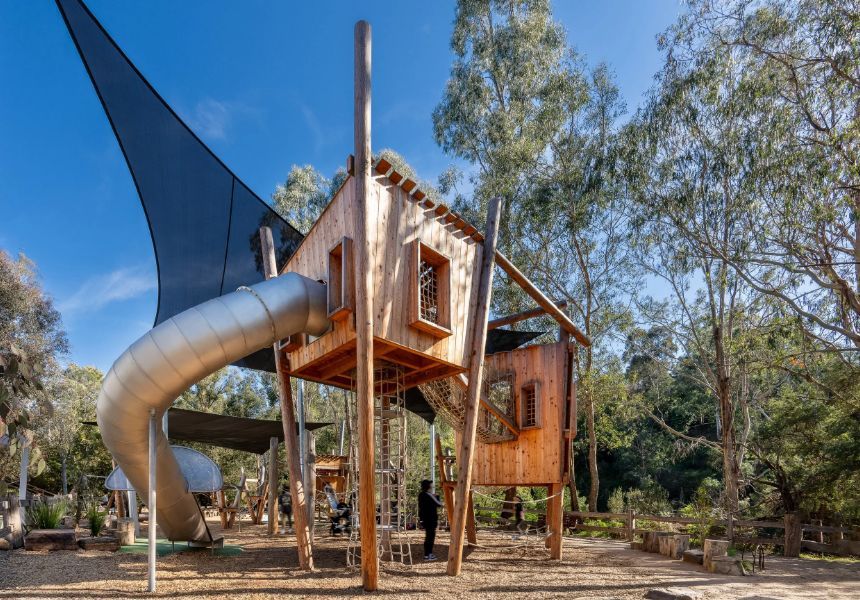
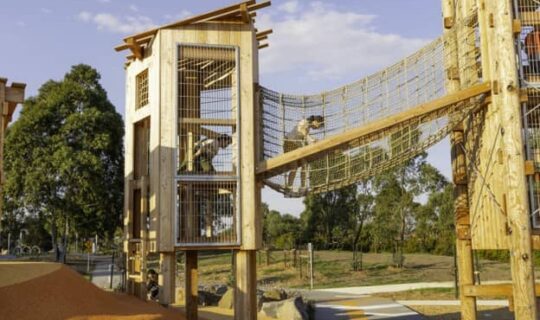
Commissioned by Manningham City Council with support from the Victorian Government’s Local Parks Revitalisation Program, the Wonguim Wilam Playspace was designed by Playce around a tree-canopy climbing theme, encouraging children to explore, climb and connect with the natural environment.
Reflecting the council’s commitment to reconciliation and meaningful community engagement, the project involved consultation with the Lions Club of Warrandyte, the Masterplan Community Reference Group, and the Wurundjeri Woi-wurrung Cultural Heritage Aboriginal Corporation.
The result is a thoughtfully designed playspace that brings together nature, play, culture and community, creating an engaging destination for children and families in Warrandyte.
Looking to Create a New Community Playspace?
If you’re planning a new playground, park upgrade or public landscape project, Urbania can help turn your vision into a completed space.
With more than 60 years of combined industry experience, our team brings the knowledge and expertise required to deliver complex playground and landscape construction projects across a range of environments.
From council playgrounds and community parks to schools, developments and hospitality spaces, as well as commercial playground equipment in Australia we provide bespoke construction solutions tailored to the requirements of each project.
Talk to the Urbania team today by calling 1300 920 439 or email us at info@urbania.com.au to discuss your playground or landscape project.
Related blog
-
 Designing Playgrounds for All Abilities: Principles of Inclusive, Accessible Play
Playgrounds are a space that have always fostered a genuine sense of community and inclusivity. They are also a place...
Read More
-
A Creative Playspace Inspired by Aussie Farm Life
From a farmhouse tower to a magical slide inspired by an Aussie grain silo, the playspace we created for The...
Read More -
Why Every Community Needs a Quality Playground Space
According to Early Childhood Australia, pre-school kids should be spending at least 80 mins a day in physical activities like,...
Read More -
Bringing Children Back To Nature Through Playful Spaces
Children are spending more time than ever in front of screens. While technology has its benefits, the importance of unplugging...
Read More


 20/324 Settlement Road
 1300 920 439
  info@urbania.com.au

